
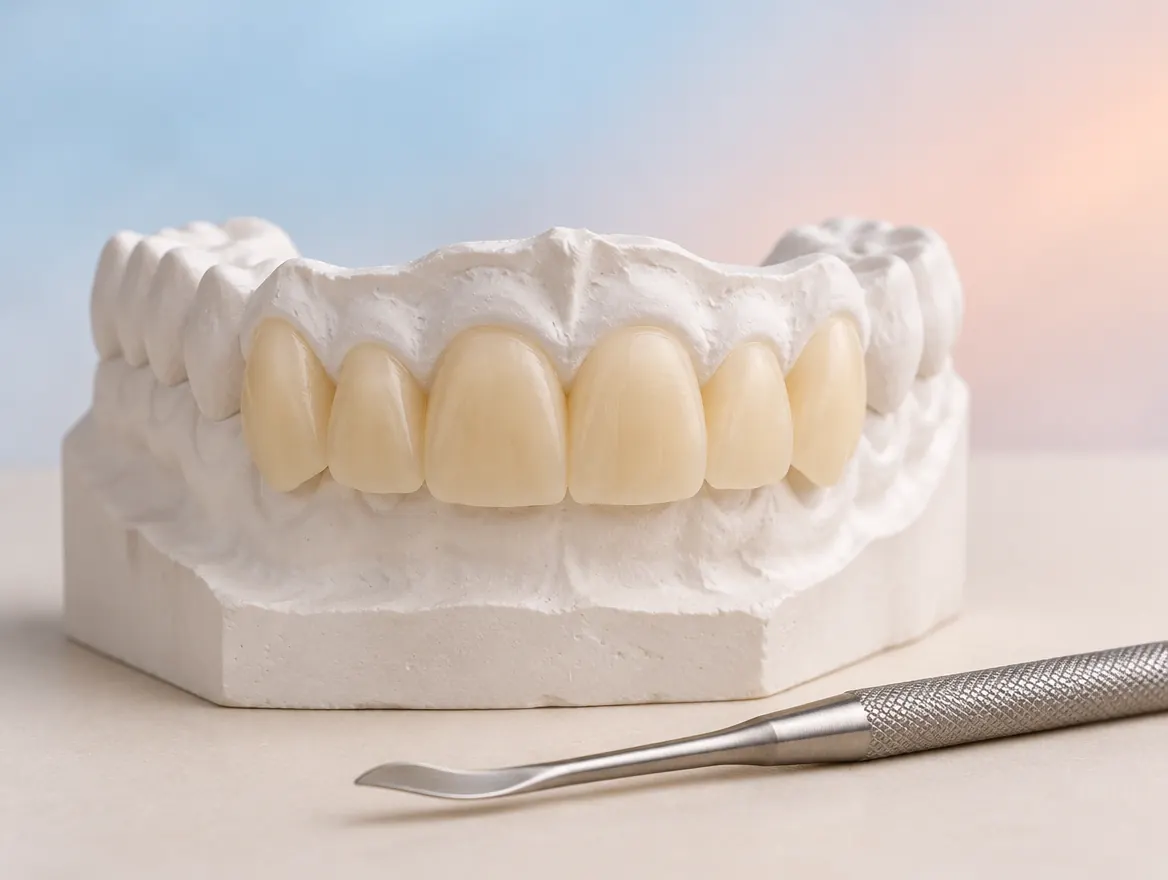
The most common worry before veneers is how they will look on me. The smile trial, technically called a mock-up, answers that question.
How the trial is made
- 01Impression and photographsAt the examination we take impressions of your teeth and photograph your smile.
- 02Wax-upOn a model of your teeth the technician adds in wax what is missing: length, width, a closed gap.
- 03Transfer to the mouthA mould is made over the wax model. The mould is filled with temporary material and placed on your teeth.
After a few minutes the mould is removed, and a thin layer in the shape of the future teeth stays on your teeth.
What to look at on the trial
- The length of the teeth when your lips are relaxed and when you smile.
- The width of the teeth and whether the gaps are closed.
- How you pronounce S, F and V. If the teeth are too long, these sounds come out differently.
- How the smile looks in a photograph, not only in the mirror.
Do not judge shade and shine on the trial. The temporary material is more opaque than ceramic. The trial shows shape.
If you want changes
Say what bothers you. The dentist can shorten or round the trial straight away in the mouth. Larger changes go back to the technician, and the trial is repeated.
Why it is done
Preparing a tooth cannot be undone. The trial is therefore the moment when you can still say no or ask for something else. Once you confirm the shape, the technician makes your veneers or crowns to it. The whole planning method is described on the Digital Smile Design page.